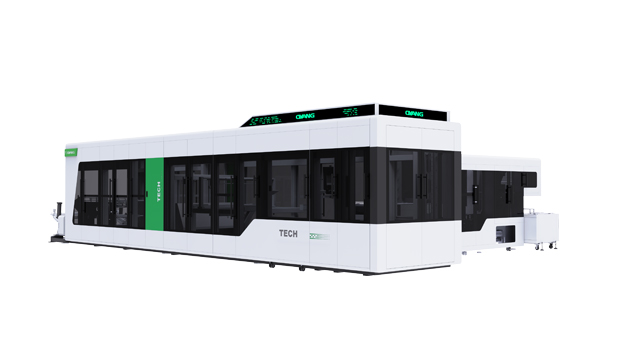
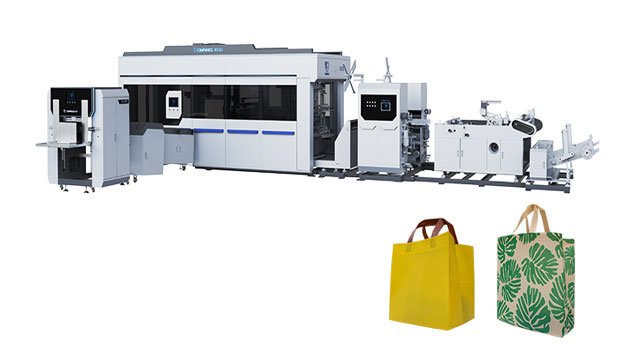
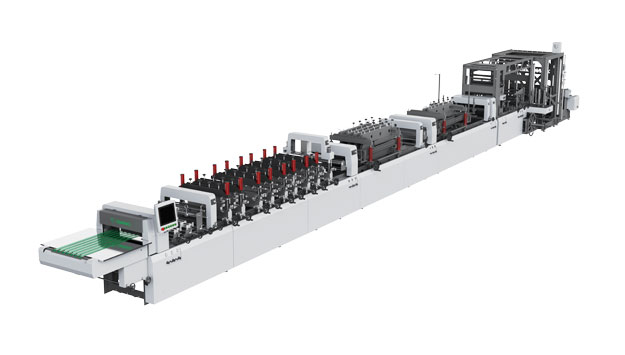
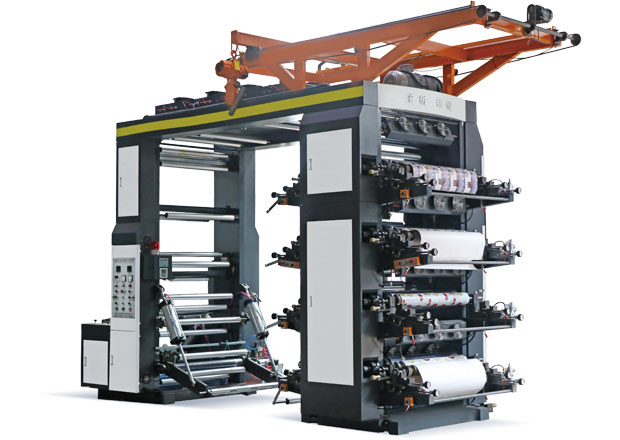
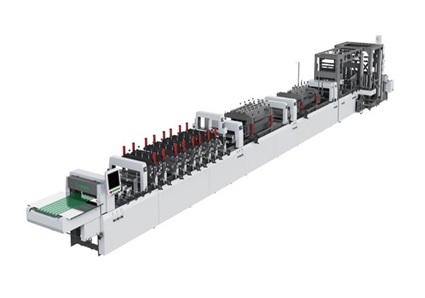
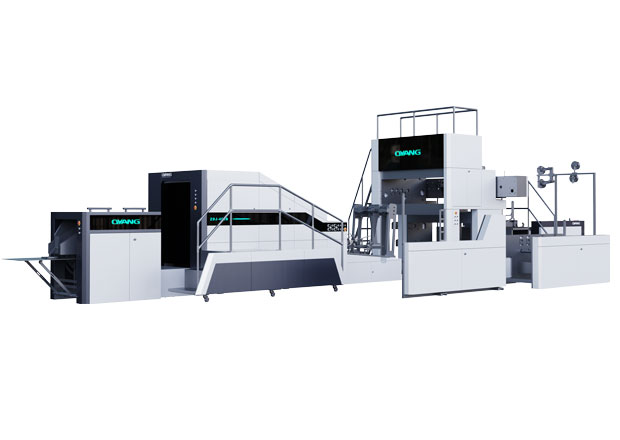
For non-woven bag manufacturers, roll to roll screen printing is an efficient solution for continuous fabric printing before bag forming. It is especially suitable for large-volume orders requiring consistent patterns, brand logos, and multiple-color designs on non-woven rolls.
Selecting the right printing system depends on production requirements, including printing speed, color quantity, registration accuracy, drying method, and how the printing process connects with the bag making line. A professional roll to roll screen printing machine manufacturer should provide not only printing equipment but also a complete production solution based on actual factory needs.
Roll-to-roll screen printing in non-woven bag production: Where does it fit in the process?
What is the role of roll-to-roll screen printing for non-woven bags?
In non-woven bag production, roll to roll screen printing is normally performed before cutting and bag forming. Instead of printing individual finished bags, the machine prints directly on continuous rolls of non-woven fabric.
The typical production flow includes:
Non-woven fabric roll → Roll-to-roll screen printing → Drying/curing → Cutting → Bag making → Finished bags
This production method improves efficiency for large orders because the fabric can be printed continuously with stable quality before entering the bag manufacturing process.
Compared with manual or sheet-based printing, roll-to-roll printing provides better consistency for high-volume production, reduces material handling, and supports automated manufacturing.
What orders are more suitable for screen printing instead of other printing methods?
Why choose screen printing for non-woven bag production?
Screen printing remains widely used for non-woven bags because it provides strong ink coverage, good color visibility, and reliable performance on various fabric surfaces.
It is particularly suitable for:
Large quantity promotional bags
Corporate logo printing
Simple or medium-complexity graphics
Solid color backgrounds
High-coverage ink applications
Cost-sensitive bulk orders
For designs requiring strong color layers or durable printing effects, screen printing often offers better economic value than some digital printing methods.
However, highly detailed images, variable data printing, or small customized batches may require different printing technologies. The right choice depends on order volume, design complexity, and production objectives.
Why are registration accuracy, drying and stable feeding important in continuous roll production?
How does a roll-to-roll screen printing machine maintain printing quality?
In continuous fabric printing, printing accuracy depends on several key systems working together. A small deviation in fabric feeding or screen alignment can affect the final appearance of thousands of bags.
Important factors include:
Precise fabric tension control
Stable roll feeding and rewinding
Accurate screen positioning system
Consistent ink application
Effective drying and curing process
A reliable roll to roll screen printing machine manufacturer should focus on overall production stability rather than only machine speed.
For continuous operation, proper drying is especially important. Insufficient drying may cause ink transfer, smearing, or quality problems during later cutting and bag making processes.
How do one-color, two-color and multi-color requirements affect machine selection?
Which roll-to-roll screen printing machine is suitable for my production needs?
The required printing configuration depends mainly on product design and production volume.
For single-color printing:
Suitable for simple logos, text, and basic patterns
Lower equipment investment
Easier operation and maintenance
For two-color or multi-color printing:
Requires better registration control
Needs more precise screen positioning
Requires improved drying capacity
Usually involves more complex machine configuration
When selecting equipment, buyers should consider future order growth instead of choosing only based on current production needs. A properly configured machine can support expanded product ranges and reduce future upgrade costs.
How can the printing machine connect with the following bag making process?
Can roll-to-roll printing be integrated with non-woven bag production lines?
Yes. Efficient production depends on how well the printing process matches the downstream bag making operation.
Important connection points include:
Printed roll width compatibility with bag making machines
Fabric quality after printing and drying
Roll handling efficiency
Production scheduling between printing and bag forming
A well-planned workflow helps reduce intermediate storage, manual handling, and production delays.
For manufacturers producing large quantities of printed non-woven bags, the printing machine and bag making equipment should be considered as part of one complete production system rather than separate machines.
FAQs
What is roll-to-roll screen printing for non-woven bags?
Roll-to-roll screen printing is a continuous printing process where non-woven fabric is printed directly from a roll before being cut and converted into finished bags. It is commonly used for high-volume bag production.
What are the advantages of roll-to-roll screen printing compared with traditional printing methods?
It offers continuous production, stable printing quality, efficient material handling, and lower unit costs for large-volume non-woven bag orders.
How do I choose a reliable roll to roll screen printing machine manufacturer?
Evaluate the manufacturer’s experience, machine structure, printing accuracy, drying system, customization capability, and after-sales technical support.
Can roll-to-roll screen printing handle different non-woven materials?
Yes. However, machine settings such as ink selection, tension control, and drying parameters should be adjusted according to fabric type and thickness.
What should I confirm before purchasing a roll-to-roll screen printing machine?
Buyers should define printing colors, fabric specifications, required speed, production volume, drying requirements, and integration needs with existing bag making equipment before requesting a quotation.
 English