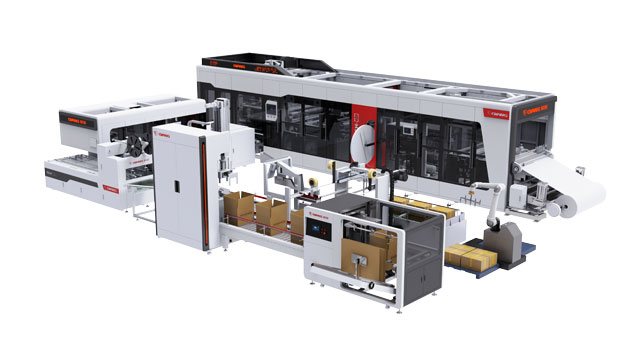
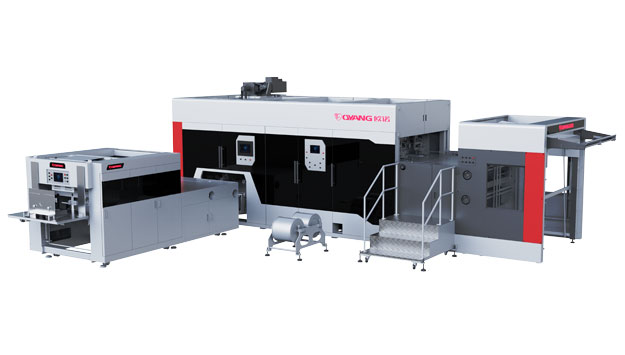
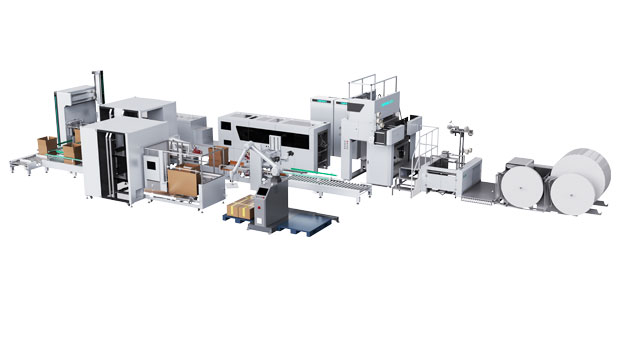
Choosing the right non woven bag machine manufacturer for high-volume production requires more than comparing machine speed or price. The most reliable supplier should have proven manufacturing capability, stable automation technology, strong engineering support, and experience delivering machines that operate continuously in real production environments.
For large-scale production projects, buyers should evaluate whether the machine matches their bag types, materials, output targets, and long-term operation requirements before making an investment decision.
Confirm the Machine Route Based on Bag Type and Material Before Looking at Maximum Speed
What should buyers consider before selecting a non woven bag making machine?
Production requirements should determine the machine configuration, not the advertised maximum speed. Different non woven bags require different technical solutions depending on material structure, bag size, handle design, printing requirements, and production process.
Before contacting a supplier, buyers should confirm:
Bag style, including flat bags, vest bags, D-cut bags, loop handle bags, or customized designs
Non woven fabric thickness and GSM range
Fabric width and roll specifications
Required daily or monthly production capacity
Additional processes such as printing, ultrasonic sealing, or handle attachment
A professional non woven bag making machine factory will analyze these factors first and recommend a suitable production line instead of simply offering the fastest model.
A machine running at high speed but frequently requiring adjustments may deliver lower real output than a properly configured machine with stable continuous operation.
How Does Automation Level Affect Stable Output, Labor Cost and Changeover Efficiency?
Is a fully automatic non woven bag making machine better for high-volume production?
For high-volume manufacturing, automation level directly influences production efficiency, labor requirements, and consistency. However, the best solution depends on product variety and production strategy.
A high-efficiency machine should provide:
Automatic feeding and tension control
Precise ultrasonic sealing system
Stable bag length control
Automatic counting and stacking functions
Quick adjustment for different bag sizes
Higher automation reduces dependence on manual operation and helps maintain consistent product quality during long production runs.
For factories producing multiple bag styles, changeover efficiency is also important. A machine that can be adjusted quickly between orders can reduce downtime and improve overall equipment utilization.
How Can Real Sample Bags and Continuous Testing Verify Equipment Compatibility?
Why should buyers request sample production before ordering?
Technical specifications alone cannot fully demonstrate machine performance. Real sample testing allows buyers to confirm whether the equipment can handle their actual materials and achieve expected production results.
Before purchasing, buyers should evaluate:
Finished bag appearance and sealing strength
Stability during continuous production
Production speed with actual fabric materials
Accuracy of bag dimensions
Ease of operation and adjustment
A reliable non woven bag machine manufacturer should be willing to provide factory testing, sample production videos, or on-site trial runs.
Continuous testing is especially important for high-volume projects because problems that appear after several hours of operation can significantly affect production efficiency.
Why Do Manufacturer Engineering Capability and Overseas Service Directly Affect Production Start-Up Time?
How do I choose a reliable non woven bag making machine factory?
The ability to manufacture a machine is only one part of successful cooperation. Engineering support before and after delivery plays a critical role in achieving fast production launch.
Buyers should review:
Machine design and improvement capability
Experience with international projects
Installation and commissioning support
Operator training programs
Spare parts availability
Response speed for technical issues
An experienced manufacturer can help customers avoid problems during installation, optimize machine settings, and shorten the time from delivery to commercial production.
For overseas buyers, choosing a factory with export experience is often more valuable than selecting a supplier based only on initial quotation.
From Inquiry to Acceptance: How Can High-Volume Projects Reduce Implementation Risks?
Large production projects require careful planning from the first RFQ stage to final acceptance. Clear technical communication helps prevent misunderstandings regarding machine functions, output expectations, and delivery requirements.
Before sending an inquiry, buyers should prepare:
Target bag specifications
Material details
Expected production capacity
Factory power standards
Required automation features
Quality standards for finished bags
Installation location and schedule
During acceptance, buyers should verify:
Machine operation under normal production conditions
Actual output performance
Product quality consistency
Operator training completion
Documentation and spare parts delivery
A structured evaluation process helps companies select a dependable partner and achieve faster return on investment.
FAQs
What is the most important factor when choosing a non woven bag machine manufacturer?
The most important factor is the manufacturer’s ability to provide a complete production solution, including suitable machine configuration, engineering support, testing capability, and after-sales service.
How can I know if a non woven bag making machine is suitable for mass production?
Check whether the machine can maintain stable performance during continuous operation, produce qualified sample bags, and meet your required output under real production conditions.
Should I choose the fastest non woven bag making machine available?
Not always. Maximum speed does not guarantee higher productivity. Machine stability, automation efficiency, maintenance requirements, and material compatibility are equally important.
What information should I provide when requesting a quotation?
Provide bag type, material specifications, production targets, automation requirements, and any special functions needed. Detailed information allows manufacturers to recommend an accurate solution.
Why should overseas buyers work directly with a non woven bag making machine factory?
Direct cooperation with a factory usually provides better technical communication, customization options, production transparency, and long-term service support.
 English