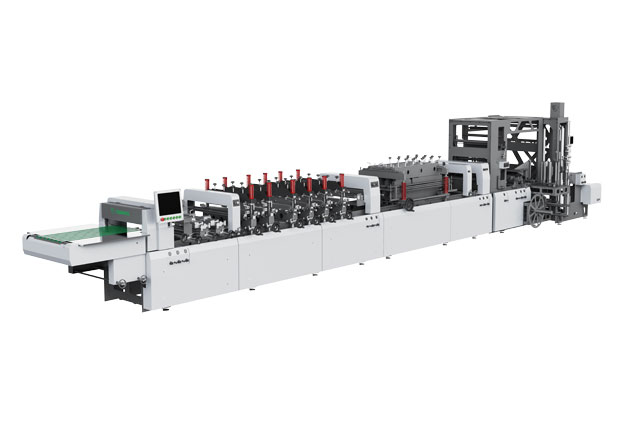
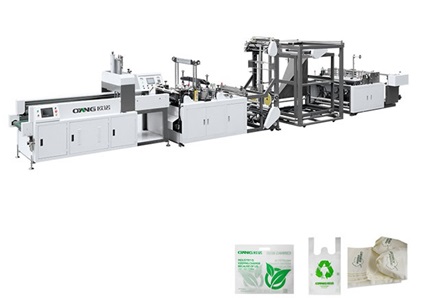
Large-scale paper cutlery production requires more than a forming machine. Manufacturers need a complete production solution that ensures stable forming quality, accurate dimensions, efficient operation, and consistent output. A reliable paper cutlery making machine enables factories to produce spoons, forks, and knives with high efficiency while meeting the increasing demand for sustainable disposable tableware.
The production process mainly involves material preparation, forming, heating or pressing, quality inspection, and packaging. Selecting the right equipment depends on product design, production volume, and the level of automation required.
Paper cutlery production process: What are the key steps from raw material to finished products?
How is paper cutlery manufactured at commercial scale?
The production of paper cutlery usually starts with specially treated paper-based materials that can provide sufficient strength, rigidity, and food-contact safety.
A typical production workflow includes:
Raw material preparation → Sheet or blank feeding → Heated forming → Shape pressing → Cooling and setting → Quality inspection → Packaging
The forming stage is the core process. A high-performance paper cutlery machine applies controlled pressure and temperature to shape flat paper materials into three-dimensional products such as spoons, forks, and knives.
For commercial production, equipment stability is critical because even small variations in pressure, temperature, or feeding accuracy can affect product strength and appearance.
Modern production lines focus on reducing manual operation, improving forming consistency, and maintaining stable output during long working hours.
What are the similarities and differences between spoon, fork and knife forming processes?
Can one paper cutlery machine produce different types of tableware?
Spoons, forks, and knives share similar forming principles, but their designs require different molds and forming parameters.
The common production requirements include:
However, each product has specific challenges:
Spoons
Forks
Knives
A professional spoon manufacturing machine or multi-function forming system should be designed according to the specific product structure instead of using a one-size-fits-all approach.
Why do forming stability, edge quality and continuous production affect commercial capacity?
What determines the production efficiency of a paper cutlery making machine?
For industrial-scale production, output is not only measured by machine speed. Real production capacity depends on stable operation over extended periods.
Important performance factors include:
Consistent forming pressure
Accurate temperature control
Mold durability
Product release efficiency
Low rejection rate
Easy maintenance procedures
Poor forming stability can lead to issues such as cracks, incomplete shapes, uneven edges, or inconsistent product strength.
For manufacturers supplying supermarkets, restaurants, and food service companies, product consistency directly affects customer satisfaction and production profitability.
A reliable paper cutlery machine should maintain stable quality while minimizing downtime during continuous operation.
When should buyers choose single-product equipment or a complete paper cutlery solution?
Should I buy a machine for one product or multiple paper cutlery products?
The choice depends on production strategy and market demand.
A single-product machine may be suitable when:
The factory focuses on one specific product type
Demand is stable and predictable
Maximum efficiency for one item is the priority
A complete paper cutlery production solution is more suitable when:
Customers require different product categories
The factory wants to expand product offerings
Production flexibility is important
Orders vary between spoons, forks, and knives
For growing manufacturers, investing in flexible equipment can help reduce future expansion costs and improve market adaptability.
How can buyers select the right equipment through samples and production targets?
What information should be prepared before purchasing a paper cutlery making machine?
Before choosing equipment, buyers should define their actual production requirements rather than selecting a machine based only on specifications.
Important information includes:
Product type: spoon, fork, knife, or complete set
Product size and design requirements
Raw material specifications
Expected production capacity
Required automation level
Quality standards for finished products
Requesting sample production is one of the most effective ways to evaluate machine suitability. Buyers should check:
An experienced supplier can use these requirements to recommend the correct machine configuration and avoid unnecessary investment.
FAQs
What is a paper cutlery making machine?
A paper cutlery making machine is specialized equipment used to form paper-based materials into disposable spoons, forks, knives, and other tableware products through controlled heating and pressing processes.
How does a spoon manufacturing machine work?
A spoon manufacturing machine uses molds, pressure systems, and temperature control to shape paper materials into spoon structures while maintaining consistent size and strength.
Can one paper cutlery machine produce spoons, forks, and knives?
Some machines can support multiple product types with different molds and settings. However, buyers should confirm product requirements and machine flexibility before purchase.
What factors should I consider when choosing a paper cutlery machine?
Key factors include production capacity, forming stability, mold quality, automation level, product compatibility, and after-sales technical support.
How can I verify whether a machine is suitable for mass production?
Buyers should request sample testing, review actual production performance, and evaluate product quality, output stability, and machine reliability under continuous operation.
 English