In the printing industry, choosing the right technology directly affects production efficiency, product quality, and long-term operating costs. Two of the most widely used printing technologies for flexible packaging, labels, films, and industrial materials are flexographic printing and rotogravure printing. Although both methods can deliver high-quality printed products, they differ significantly in printing process, investment requirements, production speed, and application range.
A flexo printing machine has become a popular choice for manufacturers requiring flexible production, faster setup, and cost-effective printing solutions. Meanwhile, a rotogravure printing machine is often selected for large-volume production where extremely consistent color reproduction and premium print quality are required.
Understanding the differences between flexo and gravure printing technology helps businesses select the right equipment according to their production volume, material requirements, and quality expectations. This guide compares both printing methods in terms of working principles, quality performance, operating costs, and ideal applications.
How Flexo and Rotogravure Printing Technologies Work
Flexographic printing and rotogravure printing use different image transfer methods, which directly influence their performance characteristics.
A flexo printing machine uses flexible printing plates made from polymer materials. During printing, ink is transferred from an anilox roller to the raised image areas of the plate and then applied onto the printing substrate. The raised plate structure allows flexographic technology to print on various materials, including plastic films, paper, and nonwoven materials.
The flexographic process is known for its adaptability because the printing plates can be changed relatively quickly. Modern flexo machines often integrate advanced control systems, automatic registration technology, and efficient drying systems to maintain stable production quality.
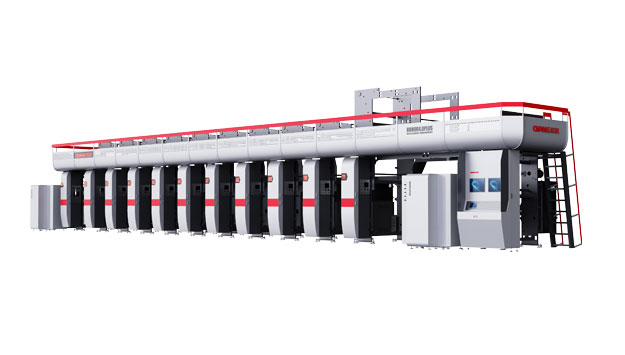
A rotogravure printing machine, on the other hand, uses engraved metal cylinders with recessed cells that hold ink. During operation, the engraved cylinder rotates through an ink bath, and excess ink is removed before the image is transferred onto the material surface.
Because the engraved cylinder contains highly precise image details, gravure printing can achieve excellent consistency and fine image reproduction. However, cylinder production requires more preparation time and investment, making it more suitable for long production runs.
Although both technologies can produce high-quality results, their different printing principles make them suitable for different manufacturing scenarios.
Flexo vs Rotogravure Print Quality and Color Performance
Print quality is one of the most important factors when comparing a flexo printing machine with a gravure printing machine. The choice depends on the required image detail, color accuracy, and product appearance.
Modern flexographic printing technology has improved significantly through advanced plate-making processes, high-definition printing plates, and precise registration systems. Today's flexo printing machine can achieve excellent print quality for many packaging applications, including labels, flexible packaging, and paper products.
A rotogravure printing machine generally provides superior consistency for high-end printing applications because the engraved cylinders can reproduce extremely detailed images and smooth color transitions. This makes gravure technology widely used for premium packaging that requires precise color matching and long-term repeatability.
| Comparison Factor | Flexo Printing Machine | Rotogravure Printing Machine |
|---|
| Image Detail | High-quality printing with modern plates | Excellent fine details and smooth gradients |
| Color Consistency | Stable for medium and long runs | Extremely consistent for large-volume production |
| Printing Preparation | Faster plate preparation and replacement | Longer cylinder preparation process |
| Best Advantage | Flexible production and cost efficiency | Premium quality and repeat production accuracy |
For many businesses, the decision is not simply about which technology produces better prints, but which printing method matches their specific product requirements and production strategy.
Production Speed, Setup Time and Suitable Order Volume
Production efficiency is another key difference between flexographic and gravure printing systems.
A flexo printing machine is designed for flexible production environments where manufacturers may need to handle different products, materials, and order quantities. Because flexographic plates are easier to prepare and replace compared with engraved cylinders, setup time is generally shorter. This makes flexo printing suitable for companies producing multiple product variations or medium-volume orders.
A gravure printing machine requires more preparation because each design usually needs a dedicated engraved cylinder. However, once the setup is complete, gravure equipment can operate at very high speeds and maintain stable output over extremely long production runs.
For businesses producing millions of identical packages, the higher initial preparation cost of a rotogravure printing machine can be justified by its outstanding efficiency during continuous production.
In general, flexo technology offers greater flexibility, while gravure technology provides maximum efficiency for large-scale standardized production.
Printing Plate, Cylinder and Operating Cost Comparison
Cost is often one of the deciding factors when choosing printing equipment. Both flexographic and gravure printing involve different types of printing components, which affect investment requirements and operating expenses.
A flexo printing machine typically uses polymer printing plates. These plates are relatively economical to produce and easier to replace when designs change. This reduces initial preparation costs and makes flexo printing attractive for businesses that frequently update packaging designs.
A gravure printing machine relies on engraved cylinders. Cylinder production involves precision engraving processes, which require higher upfront costs. However, these cylinders have excellent durability and can support very long production runs.
The overall cost difference depends on production volume. For shorter runs or products with frequent design changes, flexographic printing usually provides better economic efficiency. For large-scale production with consistent designs, gravure printing may achieve lower cost per unit over time.
Manufacturers should evaluate not only equipment price but also plate or cylinder costs, maintenance requirements, production frequency, and expected output before making a decision.
Materials and Applications Suitable for Each Printing Method
Both flexographic and gravure printing technologies can process a wide range of materials, but their application advantages are different.
A flexo printing machine is commonly used for flexible packaging, labels, paper bags, corrugated materials, and industrial packaging. Its ability to print on different substrates makes it suitable for industries requiring diverse packaging solutions.
A rotogravure printing machine is widely used for high-volume packaging applications where consistent appearance and premium-quality graphics are essential. It is commonly found in industries such as food packaging, beverage packaging, decorative films, and consumer product packaging.
The following applications demonstrate their typical usage:
Flexo printing applications: Labels, shopping bags, paper packaging, flexible films, cartons, and medium-volume packaging products.
Gravure printing applications: Large-volume food packaging, decorative films, cigarette packaging, and premium flexible packaging requiring consistent color reproduction.
The selection between flexo and gravure depends on product type, material characteristics, production quantity, and required print quality.
Flexo Printing Machine or Rotogravure Printing Machine: Which Should You Choose?
Choosing between a flexo printing machine and a rotogravure printing machine requires a clear understanding of your production requirements.
Flexographic printing is usually the better choice when manufacturers need flexibility, faster changeovers, lower preparation costs, and the ability to handle different product types. It is especially suitable for businesses producing various packaging formats or medium-volume orders.
A gravure printing machine is more suitable when the priority is extremely high consistency, premium image quality, and long-term mass production. Although the initial investment may be higher, the technology can provide excellent efficiency for large and repetitive orders.
When selecting equipment, manufacturers should consider several important factors:
Production volume and order frequency
Required print quality and color accuracy
Material types and substrate compatibility
Investment budget and operating costs
Future production expansion plans
The right printing solution is determined by balancing quality expectations, production efficiency, and total ownership costs. For many growing packaging manufacturers, a flexo printing machine provides an effective combination of flexibility and performance.
 English