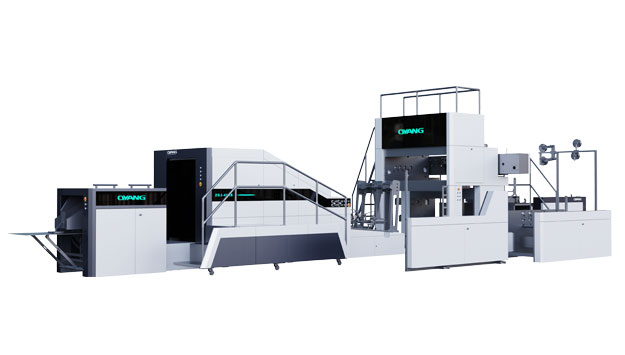
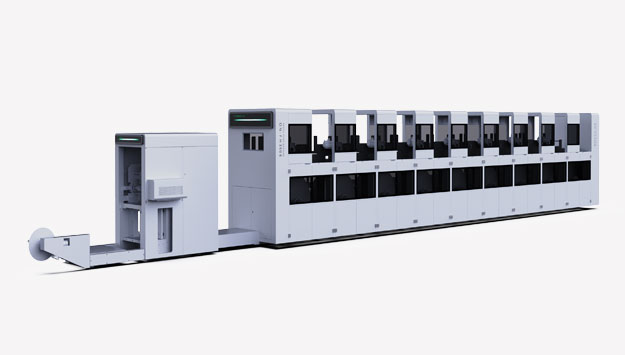
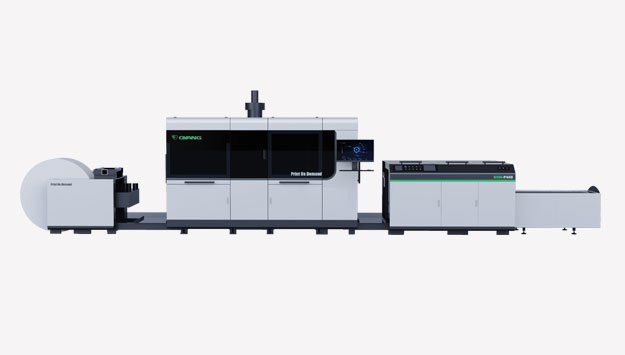
Bag making machines enable businesses to efficiently produce eco-friendly packaging from paper and nonwoven fabrics, significantly reducing plastic waste while lowering production costs. These automated solutions from a professional bag-making machine factory like Ounuo Machinery help companies meet environmental regulations while maintaining profitability through increased production speeds and substantial material savings.
The global movement against single-use plastics has created urgent demand for sustainable alternatives. Modern bag making machines provide the perfect solution by enabling large-scale production of biodegradable packaging with minimal environmental impact.
Why Are Bag Making Machines Essential for Plastic Waste Reduction?
Plastic pollution remains one of our planet's most pressing environmental challenges. Vast quantities of plastic waste are generated annually, with much ending up in oceans and landfills.
Bag making machines directly address this crisis by enabling automated production of plastic-free packaging from renewable materials. Our advanced systems can process recycled paper and plant-based nonwovens into durable shopping bags, food packaging, and industrial sacks.
Key sustainable innovations in modern bag machines include:
Precision cutting systems that drastically minimize material waste
Eco-friendly adhesive application methods
Energy-efficient power systems
Smart sensors that optimize material usage
Upgrade-friendly modular designs
Case studies demonstrate how our paper bag machines have helped major retailers eliminate substantial amounts of plastic waste while reducing their packaging expenses.
What Are the Economic Benefits of Automated Bag Making Systems?
While environmental benefits are clear, many manufacturers hesitate to adopt sustainable packaging due to cost concerns. Modern bag making machines prove that ecology and economics can work together.
Automated bag production typically offers a rapid return on investment through:
Major reductions in labor requirements
Considerable material savings through optimized cutting
High-volume production capacity
Exceptionally low defect rates
Compared to manual operations which are slower and more prone to errors, automated systems offer significant productivity advantages. When factoring in reduced waste disposal costs and potential incentives for sustainable operations, the financial benefits become even more compelling.
Research confirms that businesses using automated paper bag systems achieve noticeably lower total packaging costs than those using plastic alternatives.
What Is the Difference Between Handmade and Machine Made Bags?
As sustainability becomes more important, many customers wonder whether handmade or machine-made bags offer better environmental and quality benefits. The truth depends on several key factors.
Machine-made bags provide consistent quality, faster production, and better price points, while handmade bags offer unique craftsmanship for premium markets. Modern bag making machines can closely replicate artisanal touches while maintaining bulk production capabilities.
Key differences include:
| Feature | Handmade Bags | Machine-Made Bags |
| Production Speed | Limited output | High-volume production |
| Consistency | Slight variations | Uniform precision |
| Material Waste | Higher waste levels | Optimized material usage |
| Labor Requirements | Intensive manual labor | Automated processes |
| Customization | Easy design changes | Requires machine adjustment |
| Cost Structure | Higher unit costs | Economies of scale |
For most commercial applications, machine-made bags provide the ideal balance of quality, sustainability and affordability. However, handmade bags retain their appeal for luxury and specialty markets.
How to Start a Bag Making Business?
The growing demand for sustainable packaging makes this an excellent time to enter the bag manufacturing industry. With proper planning and the right equipment, you can build a profitable eco-friendly business.
Starting a successful bag making business requires three key elements: market research, the right equipment selection, and a solid business plan focused on sustainable materials. Here's how to begin:
Identify Your Niche
Research local market needs
Consider specializing in specific materials (paper, fabric, biodegradable plastics)
Analyze competitor offerings
Select Appropriate Machinery
Choose machines matching your production volume
Consider future expansion capabilities
Evaluate automation levels vs. labor costs
Factor in maintenance requirements
Develop Your Business Framework
Create realistic financial projections
Secure necessary certifications for sustainable products
Establish raw material supply chains
Plan marketing strategies emphasizing eco-benefits
Many new entrepreneurs find success starting with smaller semi-automatic machines before upgrading to full production lines as their business grows. Government grants and green business incentives can often help offset initial equipment costs.
Conclusion
Bag making machines represent the future of sustainable packaging, offering businesses an effective way to eliminate plastic waste while improving operational efficiency. These systems prove environmental responsibility can also mean better profitability, whether you're an established manufacturer or just starting in this growing industry.
References
[1] Ounuo Machinery. (2023). Sustainability Report: Impact of Paper Bag Automation. Zhejiang: Ounuo Press.
[2] International Packaging Association. (2023). Cost Analysis of Sustainable Packaging Solutions. Packaging Innovation Journal, 15(4), 112-125.
[3] European Commission. (2022). Directive on Single-Use Plastics (SUP) Implementation Guidelines. Brussels: EU Publications.
[4] Smith, J., & Lee, H. (2022). Automation in Sustainable Packaging Manufacturing. Journal of Cleaner Production, 340, 130815.
[5] Green Business Council. (2023). Startup Guide for Sustainable Packaging Businesses. London: Eco Press.
My Role
About Zhejiang Ounuo Machinery
As OEM specialists with many years of experience, we've delivered numerous bag machines worldwide. Our R&D team holds multiple patents in sustainable packaging technology.
About the Author
Michael Chen is a packaging engineer with extensive experience in sustainable manufacturing. Former technical consultant for major retail sustainability initiatives.
 English